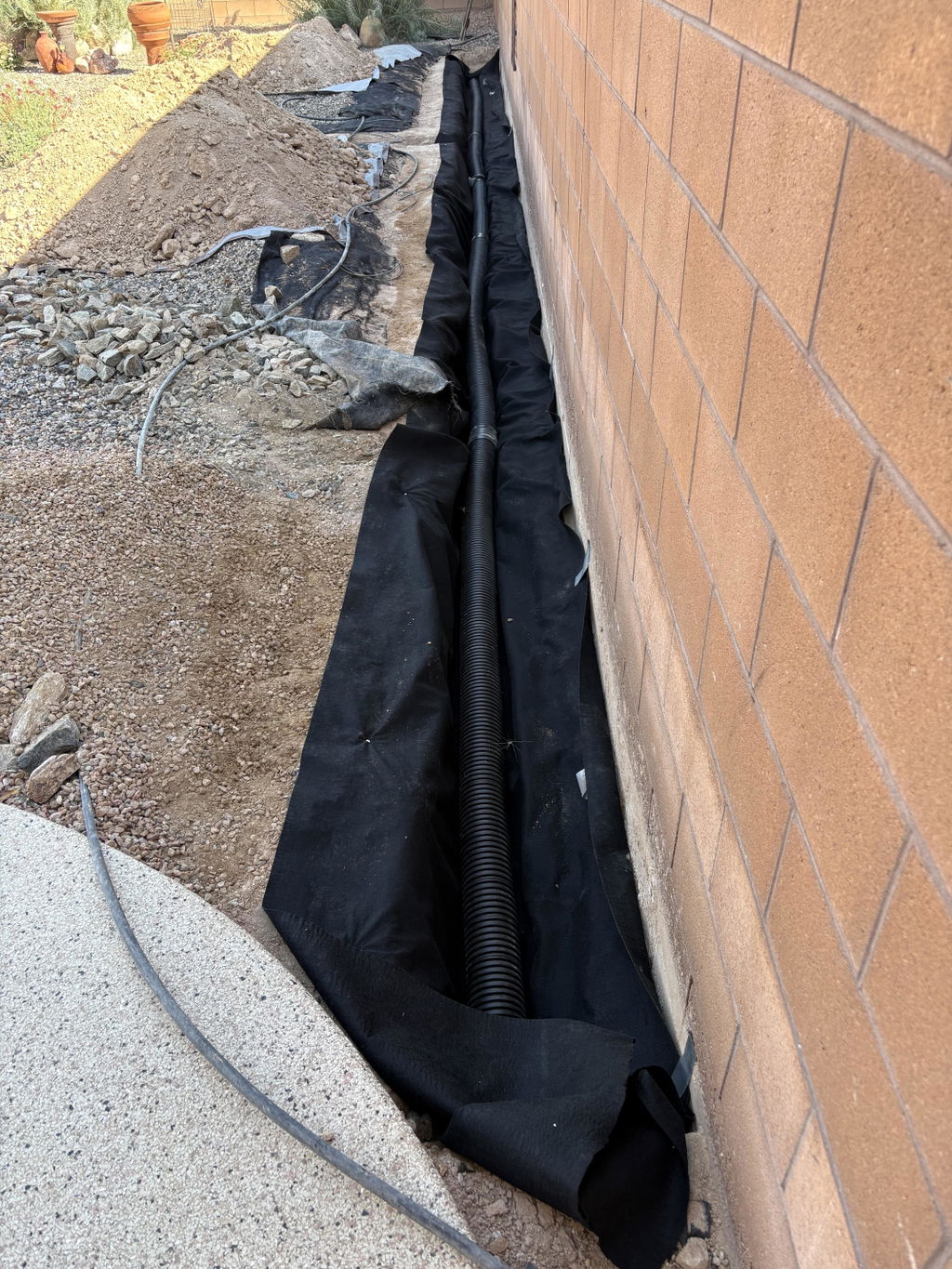
A dry well collects roof water from a downspout and lets it soak slowly into the ground, away from your foundation. The key to a dry well that keeps working for years is filter fabric: without it, soil migrates into the stone and the well clogs.
What you need
- 4 oz double needle punched non woven geotextile (its high flow rate, 140 gpm/ft², is ideal here)
- Clean drain rock, or a plastic dry well tank
- Solid drain pipe from the downspout to the well
- A shovel, and a level or string line for slope
Step by step
- Call 811 before digging to locate buried utilities.
- Pick the spot at least 10 feet from your foundation, where the ground slopes away from the house.
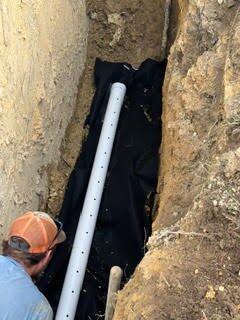
- Dig the trench for the pipe with a steady downhill slope toward the well.
- Dig the pit. Size depends on roof area and soil. Sandy soil drains fast; heavy clay may need a bigger pit or a different solution.
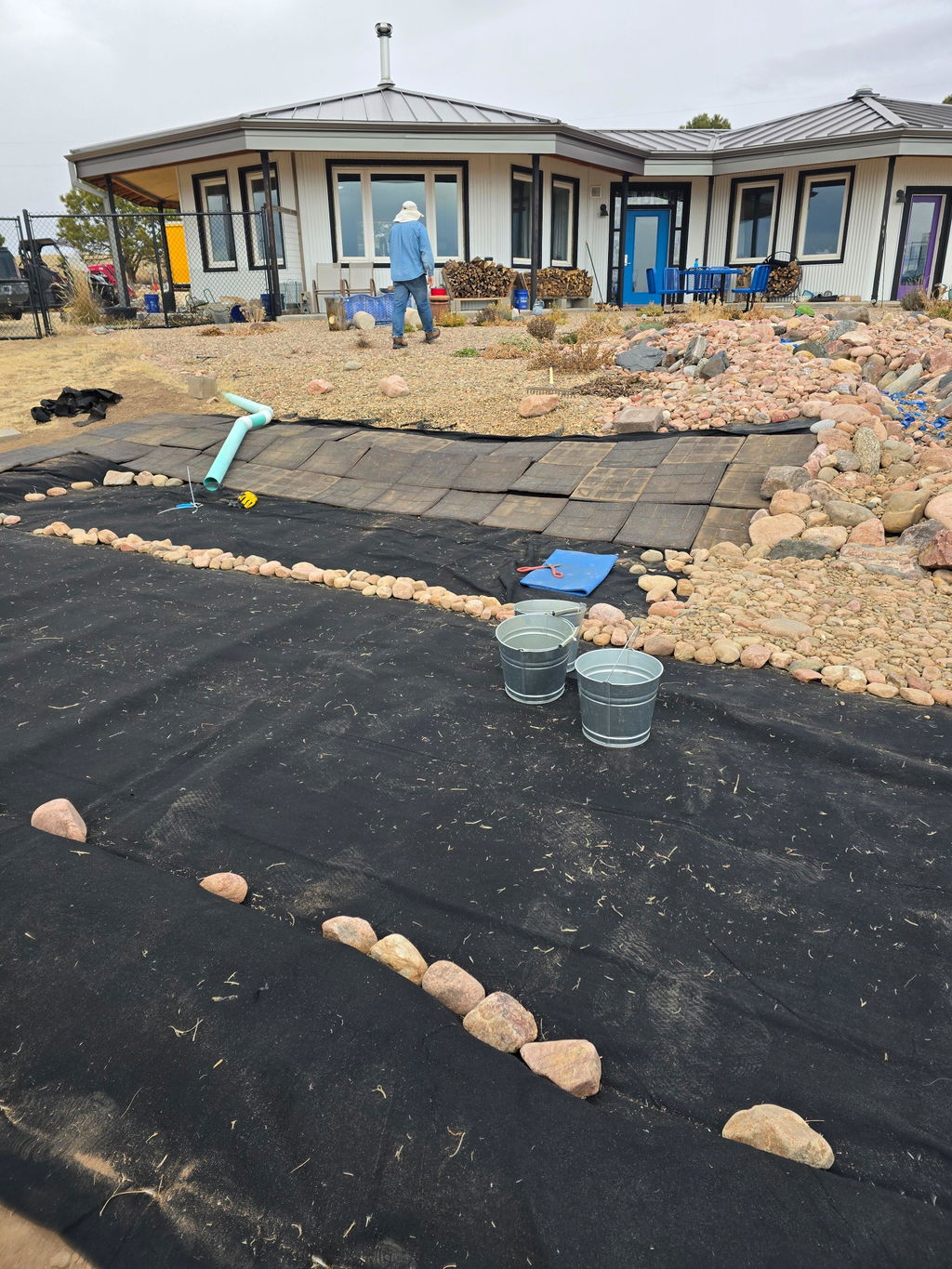
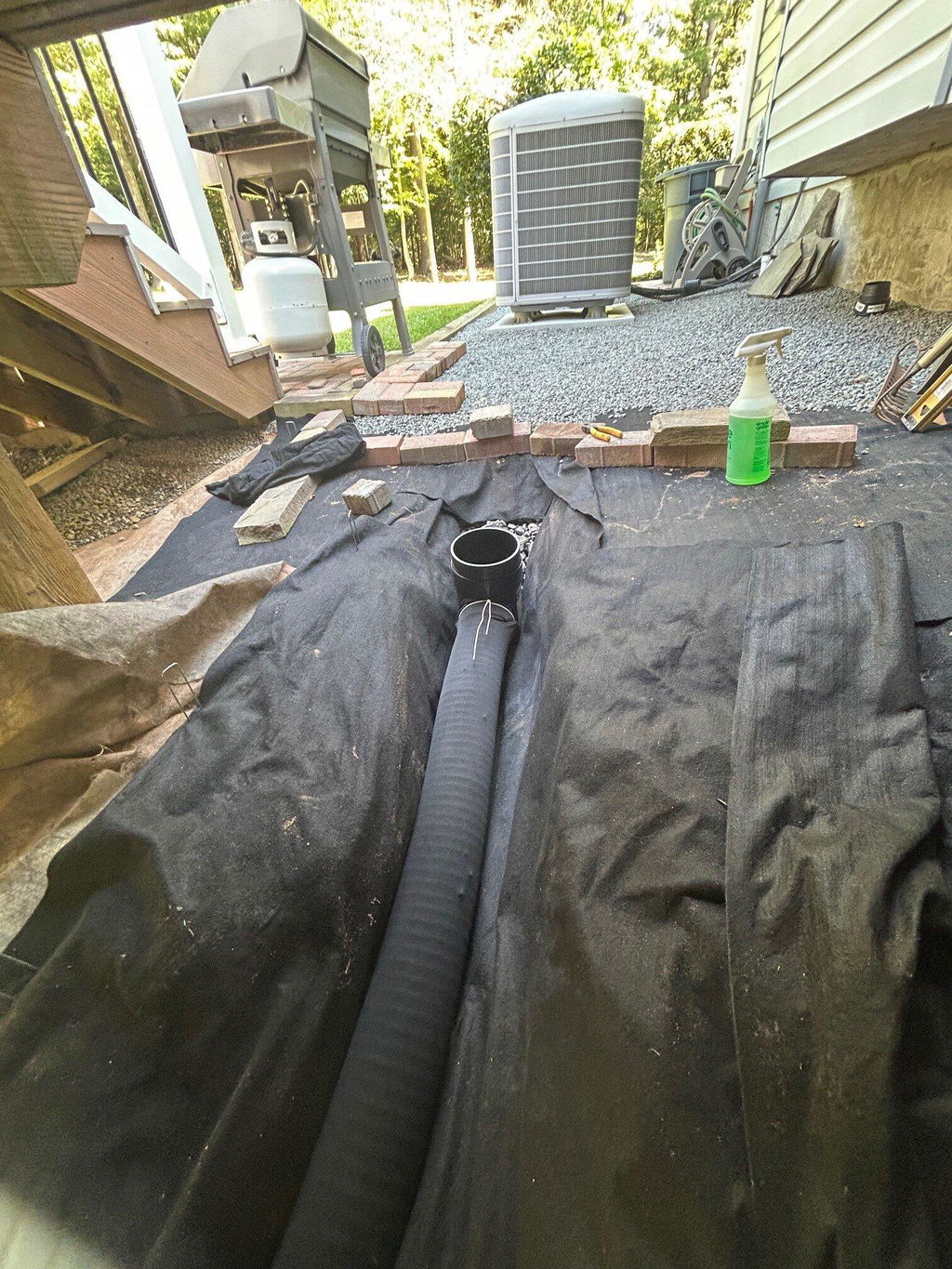
- Line the pit with fabric, bottom and sides, leaving enough extra to fold over the top.
- Fill with rock (or set the tank and backfill around it with rock).
- Connect the pipe so it empties into the center of the well.
- Fold the fabric over the top with a good overlap, then cover with a few inches of soil and sod.
Mistakes to avoid
- Skipping the fabric on top. That is where most soil gets in.
- Building a dry well in heavy clay without testing how fast it drains. Dig a test hole, fill it with water and see how long it takes to empty.
- Putting it too close to the house, which can send water right back to the foundation.
Related: French drain fabric guide. Shop 4 oz non woven. Every order ships free.
Note: Some towns have rules on where dry wells can go. If you are unsure, a quick call to your local building office will confirm.